Drums as an instrument create a huge amount energy and the key problem when recording them is capturing that energy in a pleasing manner. Microphone choice is very important in this process. However, it is largely recognised that it is hard to impossible to get a nice drum sound from an unpleasing room. To increase the quality of my drum recordings I should ensure that my drum room is as pleasing as possible.
The key problem with my room is its size. With the nature of drum sounds being very transient a lot of sound waves are dispersed around the room and if these waves reflect around too quickly (caused by short reflection duration), results can be unpleasing to the ear and harsh in the top end. To challenge this problem, I should apply diffusers to the walls in problem areas. Unfortunately, due to the size of the room it will be very hard to capture a really nice room sound.
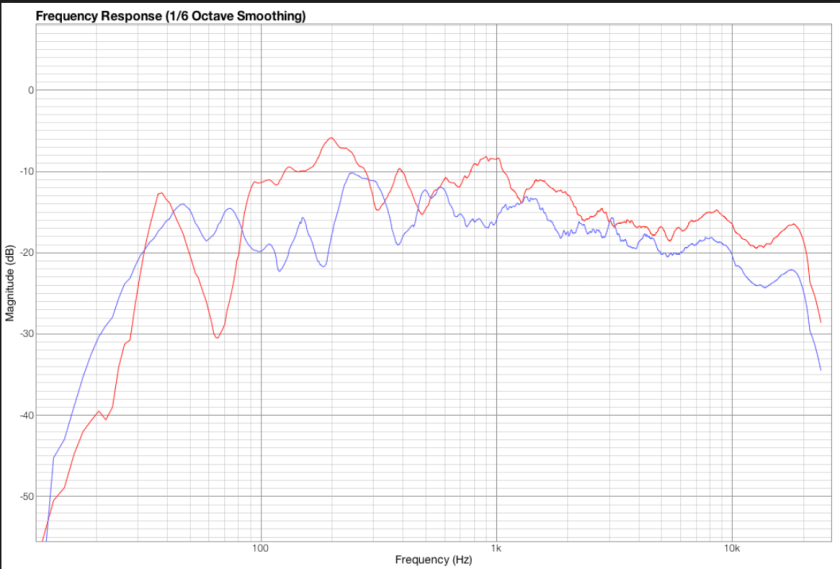
To work on my drum room I will periodically test the room with a flat microphone paying special attention to the frequency cycles that would apply to drums. A kick drums bottom end dwells between 45-60Hz, the roundness 100-150Hz. The blur in a kick drum resides between 500 – 800Hz and the presence 5000 to 8000Hz. The body of a snare exists at around 500 Hz, its punch at around 5000-8000 Hz and the hiss anywhere between 8kHz and 12 kHz. The presence of symbols exists in the regions of 800 – 6kHz, the clarity 6 – 8kHz and their brightness between 8 – 12kHz.
With this in mind we are able to flatten a room according to room testing software such as Room EQ wizard and the application of different sound treatments. Throughout this process I have
Here is a correlational graph depicting the effects of the changes to my room so far.
For more information on the types of acoustic treatment available try:
https://www.soundonsound.com/sound-advice/beginners-guide-acoustic-treatment
 Jordan Vaughan: Creative Sound Design