Multimedia: Work Flow for Composition

One’s workflow decides the efficiency of their service. Improving the effectiveness of a workflow can shave time off of your project and also improve the overall quality of the output. When working on scoring Step Forward, I realised that workflow and setup was the key to success.


Two Monitor Screens

Having a dual-screen extended desktop in this context, in my opinion is the most important physical step when setting up for this kind of compositional work. It allows one to monitor both the logic project and all of its goings on and the video in reference to the playhead position on the logic project. This allows more minute adjustments to be made, with more direct synchronisation to the visual stimulus. This was particularly useful when using markers to create a cue sheet as the detail of the larger video screen allows pinpoint accuracy.

Equipment Layout

I have found over the course of this project that I work much more efficiently when all of my equipment is plugged in and ready to go. This allows me to capture ideas upon conception and no ideas are lost plugging in a new piece of equipment. Layout has also been very important for me in my approach to this project. Leaving a microphone plugged in and ready to go allows me to capture the bare bones of a melodic idea for translation at a later period. And having all of the instruments, that I would possibly use at arms length helps to spur the creative concoctions.

Project Layout

I have also found that setting a project up with all of the instruments that are needed according to a brief plan created after the cueing stage, also helps to motivate the creative process. I have found this works best when instruments are loaded in in groups and colour coded. For example an orchestral section can be loaded in, with strings, horns, woodwind and percussion and all coloured green to signify that they all correspond to one another.


After I implemented these techniques, I found a huge improvement in my workflow and rate of work.
WBL: Drum room update – plates and diffusers

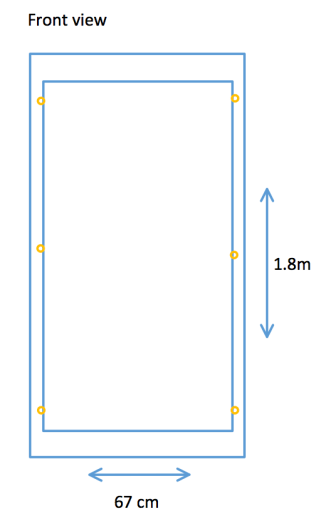
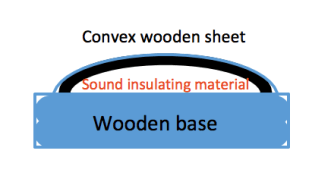
Over the past few months I’ve been working on the sound of my drum room which currently is far from ideal. After some observations I have decided that due to the size of the room the drums sound too punchy and there isn’t enough excitement in the room. In order to counteract this I intend to install some diffuser plates consisting of sheets of wood convex to the incoming sounds that disperse reflections of the sound throughout the room. I am also removing some of the absorbers from the room to see what effect this has.

Here is my design for the plates.

Screen Shot 2018-05-08 at 14.02.00Screen Shot 2018-05-08 at 14.02.06

The idea for this design came from my visit to Western Audio where Sam uses similar designs to shape the sound of his room. My hope for this treatment is that it will add a little bit of sonic excitement to the room. The wood will have a convex shape as it is cut at the same length of the base plate but set between sets of parallel screws to bend the sheet material outwards to the sound source.

WBL: Inside or Outside the box

Mixing inside the box refers to mixing in a completely digital domain, never leaving the computer and mixing outside of the box refers to the use of analog hardware such as compressors, gates and EQ’s alongside time based effects such as reverbs and delays. Analog purists argue that the warmth and sound of analog hardware far outweighs the convenience of in the box plugins but this comes with a very costly price tag. Many other engineers such as Andrew Scheps argue that the benefits of hardware are nullified by digital technology. Andrew Scheps has in fact stated on many occasions that he has transitioned to mixing completely inside the box. So, if it’s good enough for Scheps why even question it?

Because, like most of the mixing world, everything is subjective. Also, the type of processing can create different results. For example the input threshold detector of an LA-2 compressor may create a warmth that the sample rate based input detector of a digital compressor just can’t quite emulate. This having been said there are a lot of digital plugins designed to specifically emulate these unique characteristics. The argument lies in whether or not they do this successfully. Analog circuitry can have defects and this can have a desirable effect of the output signal. In a lot of cases sometimes this gear isn’t used for its designed purpose but still placed into a signal path because those little bits of harmonic distortion or the unique way that piece of gear filters the sound for example is intangible in its actual effect but that effect is still wanted.

On the flip, there are many benefits of digital plugins. For example, it would be almost impossible and crazily expensive, to stack 10 fairchild’s on top of one another in an analog format but if you wanted to do this in a digital domain, as long as you have the CPU the world is yours.


Effectively, like many of the arguments to be had in the world of mixing, this choice is completely subjective and if it sounds good it is right. So surely, it is just a case of training your ear to know what sounds good, weighing up the monetary viability and trying everything to know what sounds connect well with your now trained ear. Easy, right?


In the video above JJP discusses the development of the Puigchild 660 and 670 which is an emulation of the mono and stereo Fairchild compressors. And here, Puig states that a large majority of the time, he opts for the virtual representation of this compressors mostly because of its dexterity and flexibility. With Jack Joseph Puig having such an extensive collection of hardware and software being so renowned within the industry, it’s safe to say that this opinion should have some weight. But, regardless the most important tool that we have at our disposable is our ears and they should have last say. But sometimes, trusting the ear of a revered engineer isn’t a bad idea.


To sum up, this phrase quoted from Alan Parson, seems perfect: “Technology is important but we must be in control of it”. At the pinnacle of everything, a piece of technology regardless of its realm of existence, must be mastered to be effective. Mastering the piece of gear is the key to getting the best sound out of it. So, both hardware and software have their benefits and applications but, mastering these, knowing their unique qualities and fully knowing how to get what you want from the gear is the key to getting the BEST sound after all it takes around 10,000 hours to master any specific skill.


WBL: Mixing drums – Pensados Place

To practice mixing techniques it’s important to acquire a strong basis of knowledge. The only real way to do this is by learning from very well practised professionals. However, convincing Andrew Scheps to take a few hours out of his week to teach may not be viable.  So using resources such as Mix with the Masters and The art & science of Sound Recording would be the way to go but once again these can be very expensive. There are however free resources like this such as Pensado’s Place. The downside to these products is that the lack of monetary motivation means that less detail is outlined.

Over the course of this journey I will be exploring the effectiveness of these informational resources on my own workflow and learning methodology. Starting with a lesson in mixing drums using room microphones for excitement:-


To attempt to emulate Dave Pensado’s drum mix I used a multitude of EQ’s and compressors and left the signal otherwise dry. A lot of Pensado’s drum sounds utilise  room microphones to create energy and interest. When microphones are placed further away in proximity to the sound source it begins to capture the sound of the room in response to the energy stimulus instead of the soundwave travelling directly from source. This provides more interesting and exciting sounds in a very natural way. This works very well if the ROOM SOUNDS NICE!! Which is very much the case for the studios that mix engineers of this caliber would record in.

To the record the drums I used an AKG DRUM mic set with a D112 on the kick and a c414 in the room. The room I recorded in was a brick clad walls making it very reflective, but small making the reverb very sharp and quick.

These are the changes made inside the box once the recording is complete.


Room Mic – C414

pulled at 800 Hz (CLA frequency)

Boosted at around 3.2khz

Boosted slightly in the top end 12-14Khz


Overheads – Rode NT4’s

5khz pulled

pulled at 300 Hz to remove muddiness


Toms – AKG P4’s

pulled between 4-8kHz

Boosted at 1.5Khz


The resulting sound was punchy and full. However, the room that the drums were recorded in affected the sound hugely because this particular mixing techniques exploits the fact that Pensado has a really nice drum room to record in. So to achieve such a clean sound would require a lot more meticulous work on EQ. The room that I recorded in made the drum sound very top heavy and perhaps too bright in the cymbals.


To make this process more effective I should mix and record the sounds I am working on in a way that is very natural to me and then again with the techniques suggested within these resources.

WBL: Creating an Online Profile

In a digital age, it is a necessity to have an online presence. Effectively representing myself as a business, the internet is an revenue of income that can’t be dismissed. There are a few important benefits that the internet provides.

Firstly, it provides a way of enticing clientele to approach my business. For example, think of the last time anybody told you about a new band, the first, and probably only way you would research them, would be using the internet in some form. In this example it would probably be using a streaming service such as Spotify, but in a more subject specific capacity the logic is the same. The fact is people like convenient and the internet the pinnacle of convenience.

Secondly, it allows us to market services within a brand. This means we can tailor peoples perceptions of us. Whilst it would be unethical to provide a false representation of ourselves, we can tailor the picture to emphasise the best qualities – a strategy used a million fold in almost every industry. It would also prove detrimental to be untruthful about abilities as the internet can also provide a platform in which you as a product can be reviewed and ridiculed. However, if approached correctly good marketing is the key to monetising any skill.

Thirdly, we can create a portfolio in order to showcase skills and products. It applies a shop front to the business a place for people to access the business with ease. This will define the audience that is attracted.

Finally, the internet allows us to communicate freely and with ease. We can talk to existing clientele at the touch of a button. Having an online presence can also include social media. Social media is a HUGE platform to acquire an audience, to talk to people and to create awareness. Almost every successful business operates in some form of way on social media, so it is clearly a viable means of marketing.


Whether or not this is suitable for my needs at the moment is up for debate. I personally do not believe am not in a position from an artistic or professional point of view to advertise myself in this manner, perhaps some refinement first.

WBL :Shadowing – learning via observation

Shadowing refers to the concept of practical learning applied within an observational, vocational environment. Job Shadowing is an integral part of almost any profession. There are many benefits to this method of learning but of course there are possible downsides. In any profession to be successful and effective, it is necessary to observe seasoned professionals and learn from their habits, workflows and knowledge, in order to develop their own abilities. To implement this theory I need to secure time shadowing a mix engineer, ideally, well practiced, knowledgable and willing to pass down information. In order to do this I may need to approach existing contacts to acquire new prospective contacts, as well as approaching new contacts acquired via networking.

Watching the way that professional engineers approach their work will allow me to emulate their workflows and adapt them to suit my needs and situations. Also, this will allow me to experience the way in which the profession effects the professional and also how the working environment is functioning in respect to the professional.

Working alongside somebody well versed in a profession allows one to develop a similar mental model. This refers to the thought processing related to the work. In this instance, it will allows me to develop a problem solving mentality. The key difference between my position now and that of a working mix engineer is that a working professional has no backup and if something doesn’t work it is their sole responsibility to make it work. So spending time in this environment will allow me to develop this problem solving mentality and a responsible attitude.

There are also downsides and obstacles to shadowing as a learning method, especially in a profession such as this. For example, the engineer I’ll be shadowing may not be very well practiced in teaching and some information could be misconstrued, mis-received or simply not conveyed. However, I believe my biggest obstacle with be relinquishing social anxieties and allowing myself to be at ease within the working environment to ensure all the information I could absorb I do.


WBL: Recording/Mix Engineering – My Approach

To be a successful mix engineer I must be able to call myself flexible, efficient, knowledgable and skilled. To develop these characteristics I must apply some conscious changes to my workflow, work ethic and professionalism. Firstly and most importantly I must expand my skill set and be able to mix a wide range of sounds, implementing various techniques and methods. I must then create a base of work that is presentable to advertise my abilities to clients. This will happen naturally across my journey as I apply myself to a multitude of works. I must also create a professional image, including an online presence and self advertisement.

To ensure these changes occur, I intend to;

Apply my skills to a wide selection on genres

Apply learned skills from resources provided by seasoned professionals

Shadow industry professionals

Apply any skills learned from shadowing

create an online presence that is reflective of myself

create a networking base

attend networking events


When I reach the end of this journey I should be able to apply my abilities in a professional capacity and monetise my skill-set in a basic manner.

Mixer Basics: Monitor desks

In larger live music scenarios the use of a monitor desk separates the responsibility of the front of house mix and the monitor mix, between two engineers. It also places the monitor engineer in an ideal position to provide the best mix possible. In smaller scenarios a monitor mix would be managed via the auxiliaries on the main desk. This creates a few problems in larger scenarios. One, the mix cannot be adjusted live if needed. Two, the engineer must rely solely on the feedback of the performer to provide the mix and this can be done with more subtlety from side stage.

To install a monitor desk requires an XLR splitter box. This rack mounted equipment simply splits the signal between the two desks. Each desk needs it’s own set of amplifiers. Once installed there are subtle differences between managing a monitor desk and a front of house desk. On a monitor desk each speaker is fed from an auxiliary to groups, which takes place of the master control and the individual signals are controlled by the sends to each speaker. i.e increasing the value of an aux pot on a certain channel will that channel up in the corresponding speaker.

The industry standard method of routing these monitors runs numerically left to right, when facing the stage, 1 left, 2 centre, 3 right and 4 drummer.

Design a site like this with WordPress.com
Get started